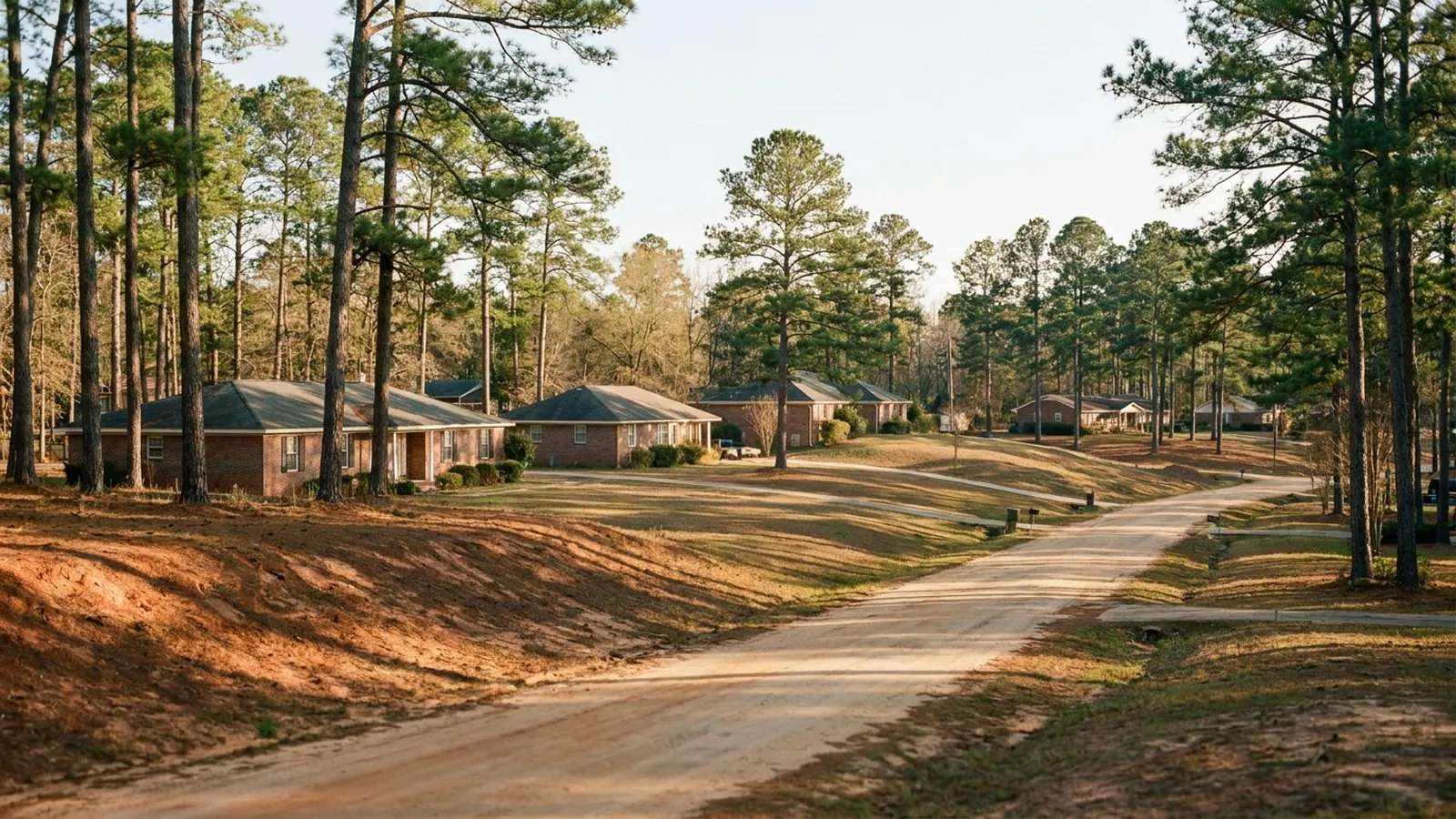
Slab foundation repair in Hattiesburg runs $3,500–$12,000. The range is set by how much of the slab sits over active material rather than by house size — a slab that crosses a buried boundary near its middle is a larger job than one where a single end has dropped.
Why cracks here run in lines, when lifting is the wrong call, and the leak that imitates the pattern.
A rigid plate over changing ground
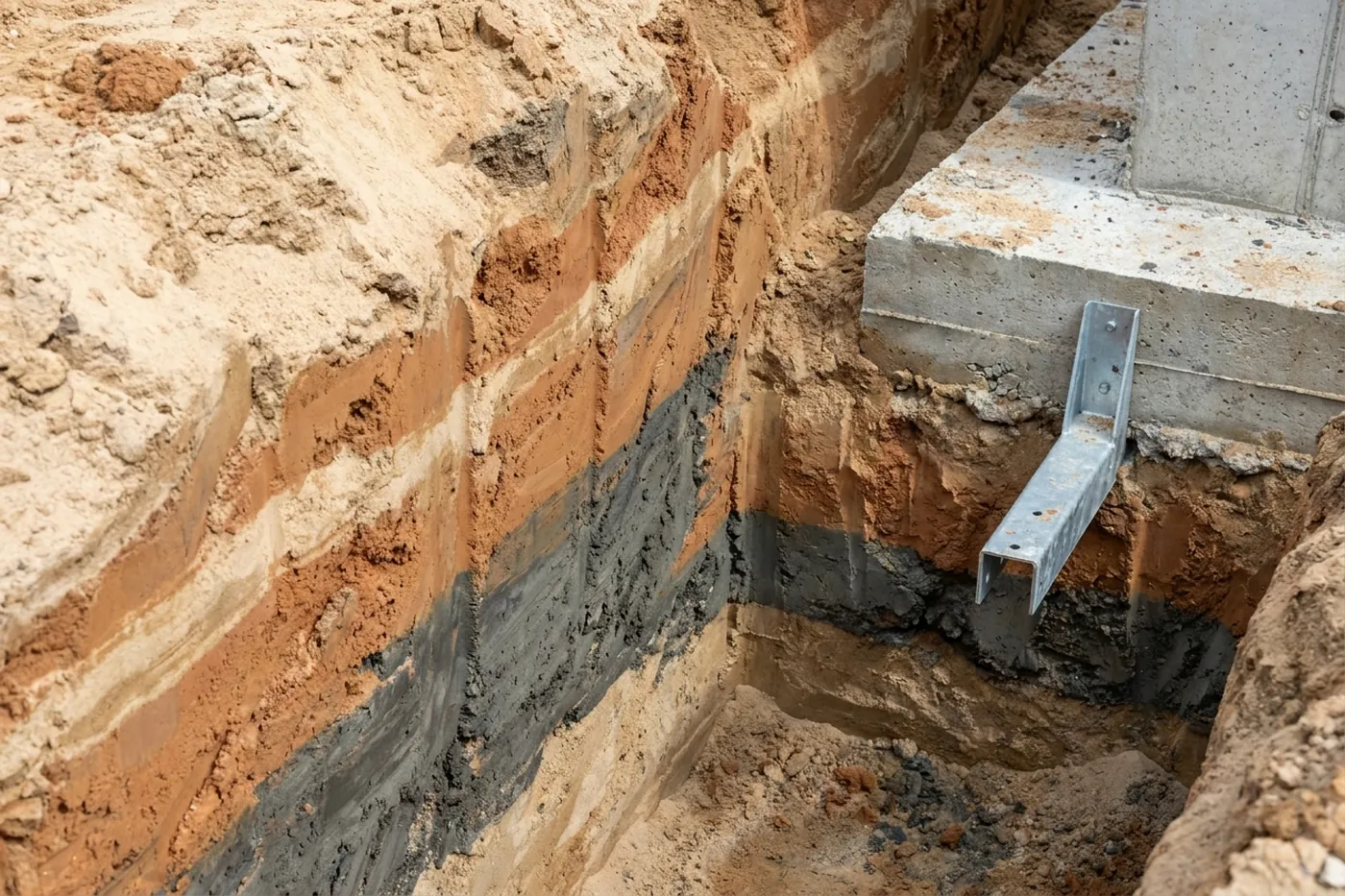
Poured concrete behaves as a single rigid object. What it rests on here does not. Because the formation alternates clay, sandy clay, sand and siltstone, one continuous pour can bridge material that heaves every wet season and material that is indifferent to weather entirely.
Concrete accommodates that for a while and then relieves the stress the only way it can. The result is often a crack that runs surprisingly straight across a room, because it is following a buried boundary rather than wandering the way a shrinkage crack does. A crack that keeps reopening in the same line after being filled is usually reporting geology, not workmanship.
What decides the price
| Situation | What the work involves | Typical range |
|---|---|---|
| One corner or one room low | Localised support under the affected section | $3,500–$6,000 |
| One end of the slab dropping | A pier line along that edge | $6,000–$9,000 |
| A boundary crossing mid-footprint | Support either side of the line, longest scope | $9,000–$12,000 |
| Movement across most of the slab | Effectively a full piering job | $10,000–$15,000+ |
| Cracks static, contour flat | Crack repair once movement has stopped | $400–$1,500 |
Lifting is a decision, not a default
Stabilising a slab holds it where it is and stops further movement. Recovering elevation restores some of what was lost and accepts a risk: coming back up closes some cracks and opens others, and finishes installed while the floor was out of level — tile, stone, cabinetry scribed to a slope — can crack during recovery.
Both are defensible. What should not happen is discovering which one you bought afterward, so the lift target belongs in the scope as a sentence rather than an assumption.
The leak that imitates all this
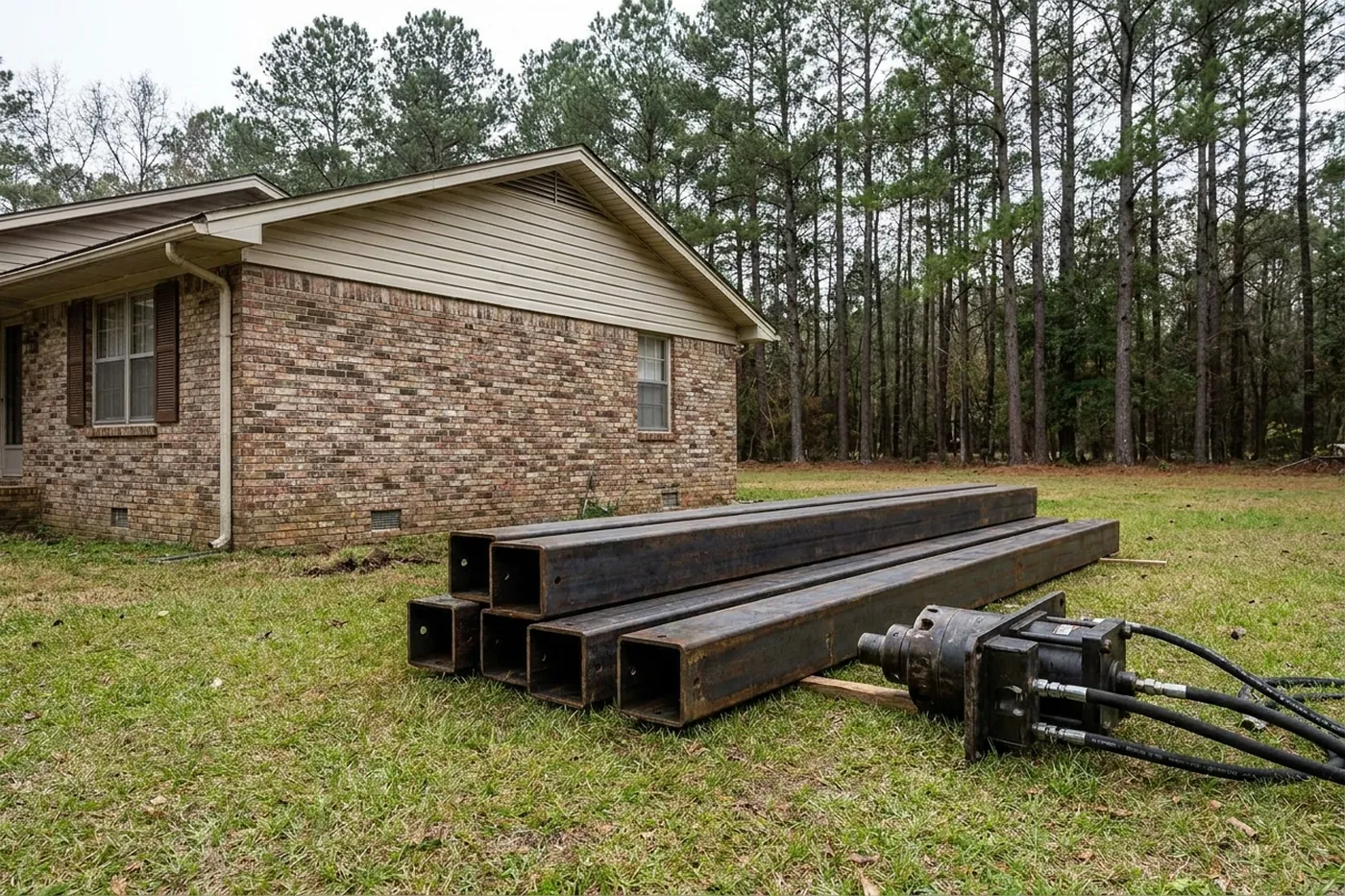
A supply or drain line failing under a slab puts water into one localised area continuously, and the movement it produces can resemble a soil problem closely. The separator is the contour: leak movement is usually tight and does not fit the pattern of the wider footprint, and it often has no relationship to where surface water goes.
Where the readings look like that, a plumbing test is the cheaper move by a wide margin. Setting piers under an area that is soft because it is being watered from below fixes the elevation and leaves the tap running.
Slab repair — asked and answered
What does slab foundation repair cost in Hattiesburg?
Slab repairs commonly run $3,500-$12,000. The range is decided by how much of the slab is over active material rather than by the size of the house. A slab where one end has dropped is a smaller job than one crossing a buried boundary near its middle.
Why do slab cracks here run in straight lines across a room?
Often because they are following something buried. Where a slab spans a boundary between two materials with different volume-change behaviour, the stress concentrates along that line, and the crack traces it. A crack that keeps reopening in the same line is usually reporting geology rather than bad concrete.
Can a slab be repaired without lifting it?
A slab can be repaired without lifting it, and it is frequently the right call. Stabilising a slab where it sits stops further movement without risking the finishes. Recovering elevation can close some cracks and open others, and on tile or stone it can crack what is down. The lift target should be a stated decision.
Is a hairline crack in my slab a problem?
Usually not on its own. Fine cracks appear as concrete cures and then stay put. What matters is whether it changes - widening, offsetting vertically so one side sits proud, or reopening after being filled. A dated pencil mark and a monthly look settles it for free.
Could it be a plumbing leak instead?
It is worth ruling out, because the pattern can look similar. A leak under the slab softens one localised area continuously. Where movement is tight, unexplained by drainage, and does not match the contour of the wider footprint, a plumbing test costs far less than a pier.
Get a Hattiesburg elevation survey
Tell us which rooms are affected and which are not. On interbedded ground that contrast is the most useful thing you can give us — a house where the front is fine and the back bedroom is dropping is telling us something about what each end is sitting on. You get a call back from a local specialist who serves Hattiesburg.