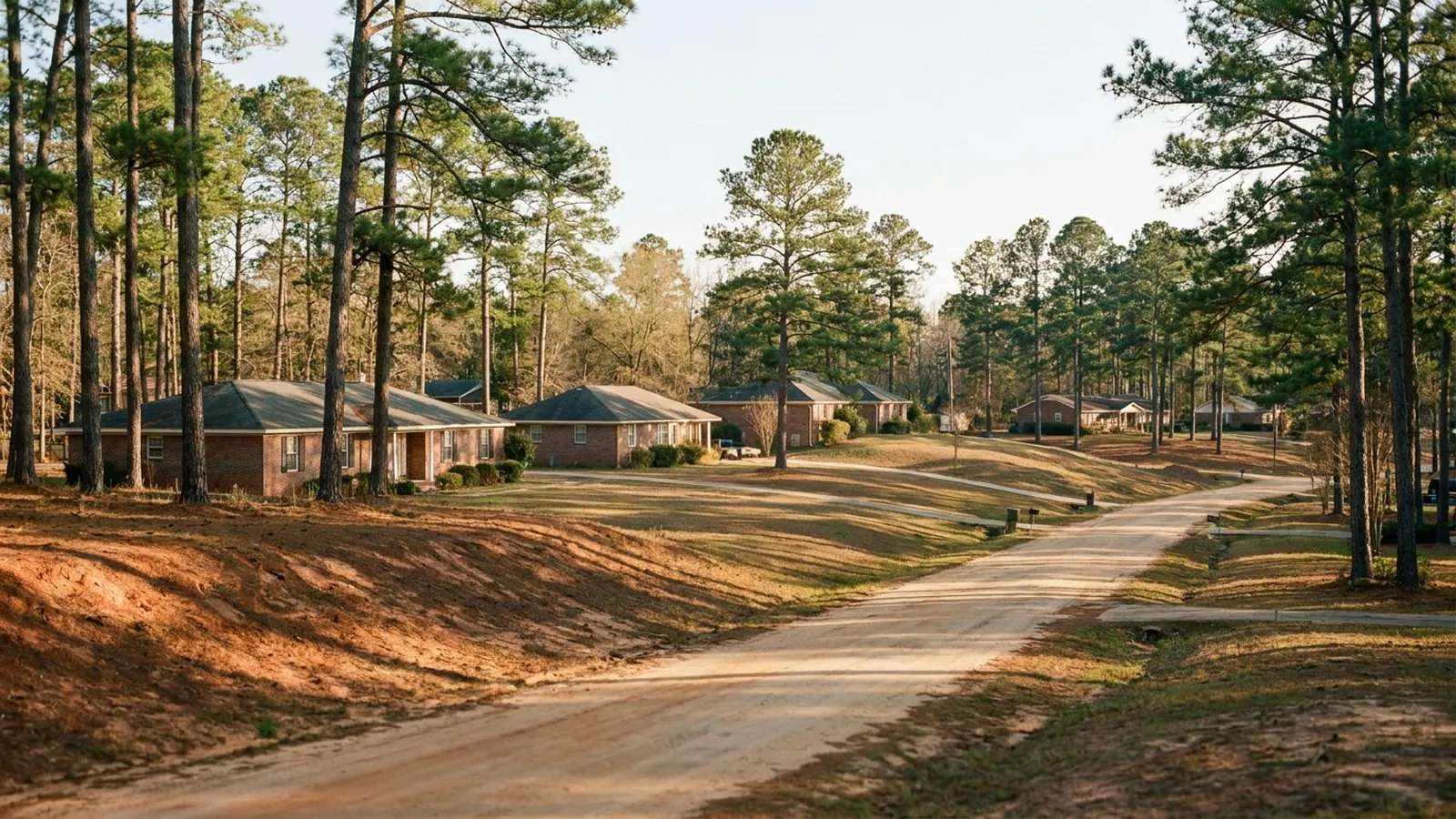
Foundation crack repair in Hattiesburg runs $400–$1,500, a price that assumes movement has stopped. On interbedded ground the crack's location on the footprint tells you more than its width does — the same crack means different things over active and inactive material.
Why location beats width here, how to build a measurement record for free, and when filling is the right move.
Location is the diagnosis
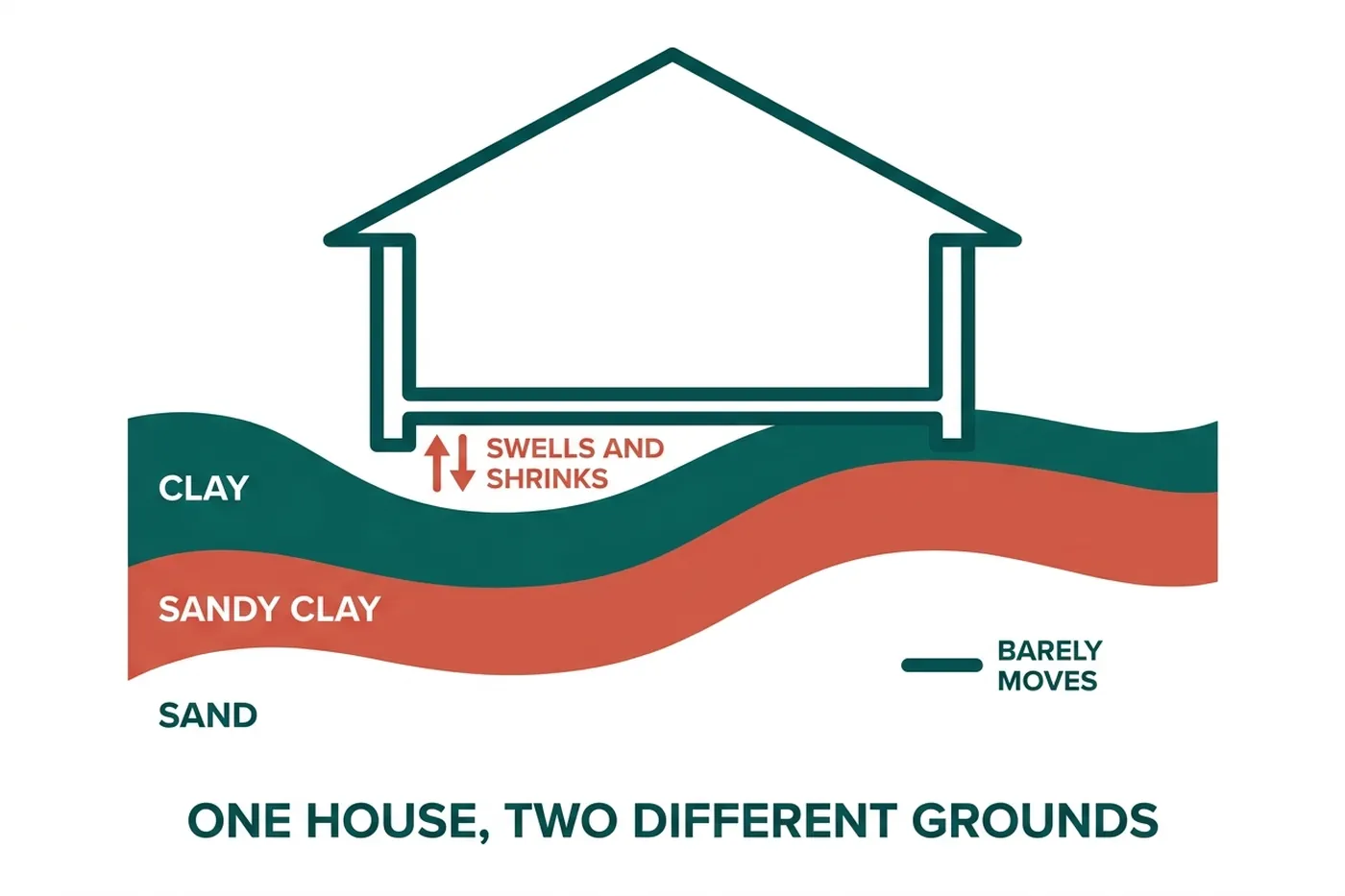
This is the part that is specific to ground like ours. On uniform soil, a crack's width and behaviour are most of the story. Where the material varies within a single footprint, the same crack carries two possible meanings depending on where it is.
A quarter-inch crack at the end of a house that the contour shows sitting low is reporting active expansive material underneath it. An identical crack in a section where the readings come back flat is a scar — a record of movement that finished, possibly years ago, and that will not resume. The first needs support before anything cosmetic. The second needs filling and nothing else.
Nothing about the crack itself distinguishes those. The elevation survey does, and it costs nothing.
Building the record yourself
- Mark both ends with a dated pencil line so growth is obvious at a glance
- Write the width at its widest point, in millimetres, with the date beside it
- Take the photo from the same spot each time, with a tape measure held in frame
- Note whether one side sits proud of the other, and whether that changes
- Repeat monthly across a full wet season and a full dry one
Six months of that record is worth more than any single inspection, and it is the one piece of evidence nobody can produce for you retrospectively. At 59.17 inches of rain a year the wet and dry extremes here are far apart, which makes seasonal behaviour unusually easy to see.
When filling is right
| What you have | Right move | Typical cost |
|---|---|---|
| Hairline, static a full year, that section reading level | Seal it and move on | $400–$800 |
| Wider, but the readings say it has settled out | Epoxy injection or carbon fibre strapping | $800–$1,500 |
| Crack that opens dry and closes wet | Water management first, fill after a cycle | $1,500–$6,000 |
| Crack where the contour reads low | Support that section before filling | $4,000–$15,000 |
| Vertical offset between the two faces | Survey before anything is filled | Often free |
Why filling first costs more
A filled crack has lost its history. The width you would have measured next spring is gone, the dated marks are covered, and the cheapest diagnostic tool available to you has been thrown away. If the movement was active, the filler cracks again and the money is spent twice.
Filling last is not a delay tactic and it is not us postponing work. It is the sequence that keeps a $500 job from becoming a $500 job done twice.
Cracks — asked and answered
What does foundation crack repair cost in Hattiesburg?
Crack repair runs $400-$1,500 for most work, and that price assumes movement has stopped. Filling a crack over ground that is still cycling is the most common way a homeowner here pays twice, so the measurement history matters more than the filling method does.
Where the crack is matters more than how wide?
On this ground, yes. A crack at the end of a house that the contour shows dropping is reporting active material below. The same width crack in a section reading flat is a scar from movement that has finished. Same crack, two different answers, and only the survey separates them.
How do I measure a crack properly?
Mark both ends with a dated pencil line, record the width at its widest point in millimetres beside the date, and photograph it against a ruler in the same light. Repeat monthly through a full wet and dry season. Six months of that beats any single visit.
What does a crack that changes with the seasons mean?
That the material under that part of the house is expansive and responding to moisture. Widening in dry spells and closing after wet ones is the classic signature. It points first at managing where water goes rather than at structural support.
Should I fill cracks myself?
Hairline and unchanging, in a slab? Go ahead. Beyond roughly a quarter inch, or where one face has lifted above the other, or where you have seen it move at all - leave it alone until it has been surveyed. Sealing it erases the only free evidence you had.
Get a Hattiesburg elevation survey
Tell us which rooms are affected and which are not. On interbedded ground that contrast is the most useful thing you can give us — a house where the front is fine and the back bedroom is dropping is telling us something about what each end is sitting on. You get a call back from a local specialist who serves Hattiesburg.