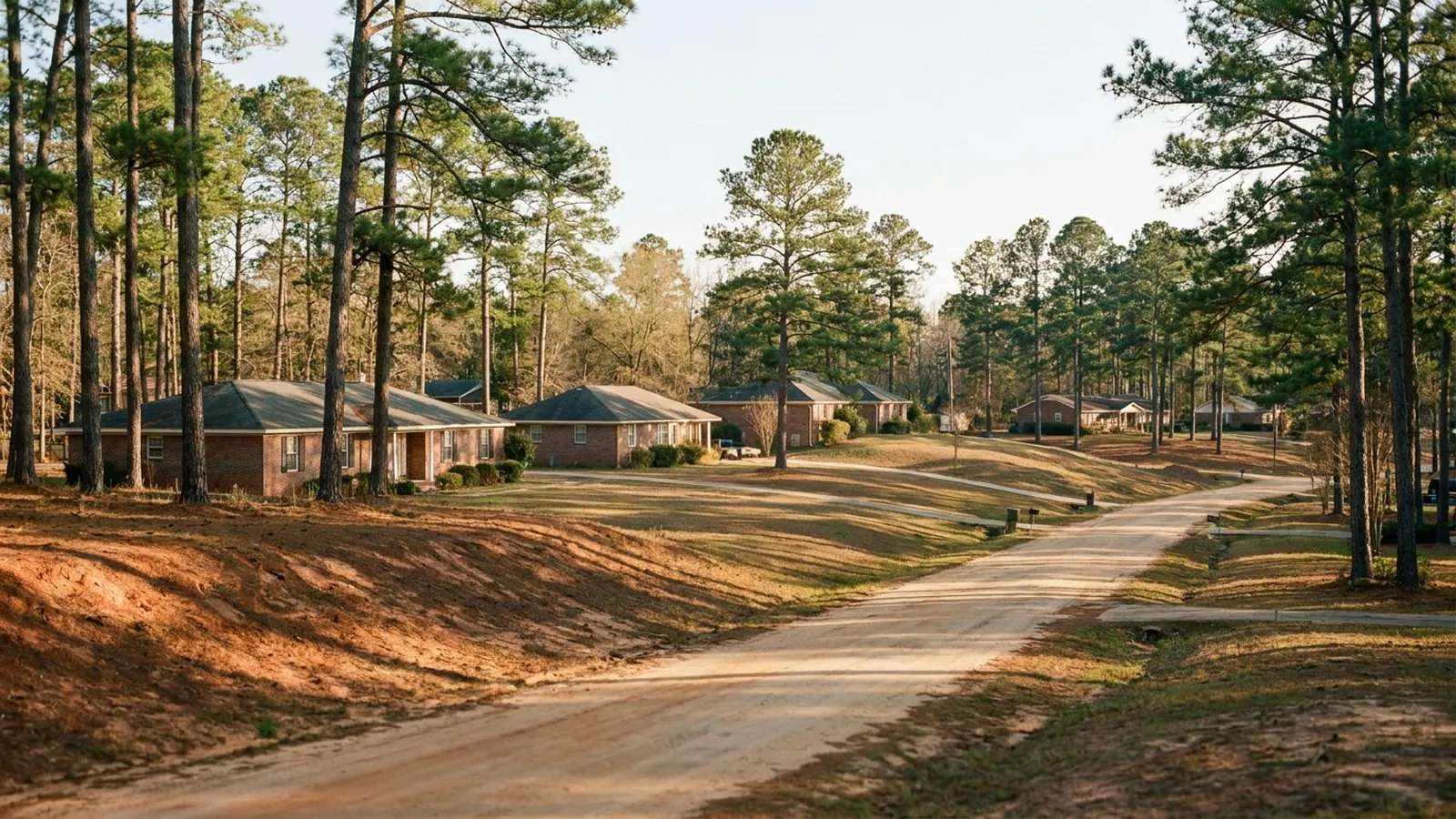
Concrete leveling in Hattiesburg runs $500–$2,500 for most driveways, patios, and walkways. It is not foundation repair — but flatwork crosses the same interbedded ground the house does with far less preparation beneath it, which makes it an early and reading.
Why flatwork reports first, how foam and mudjacking differ where material is compressible, and when lifting is the wrong answer.
Same ground, less protection
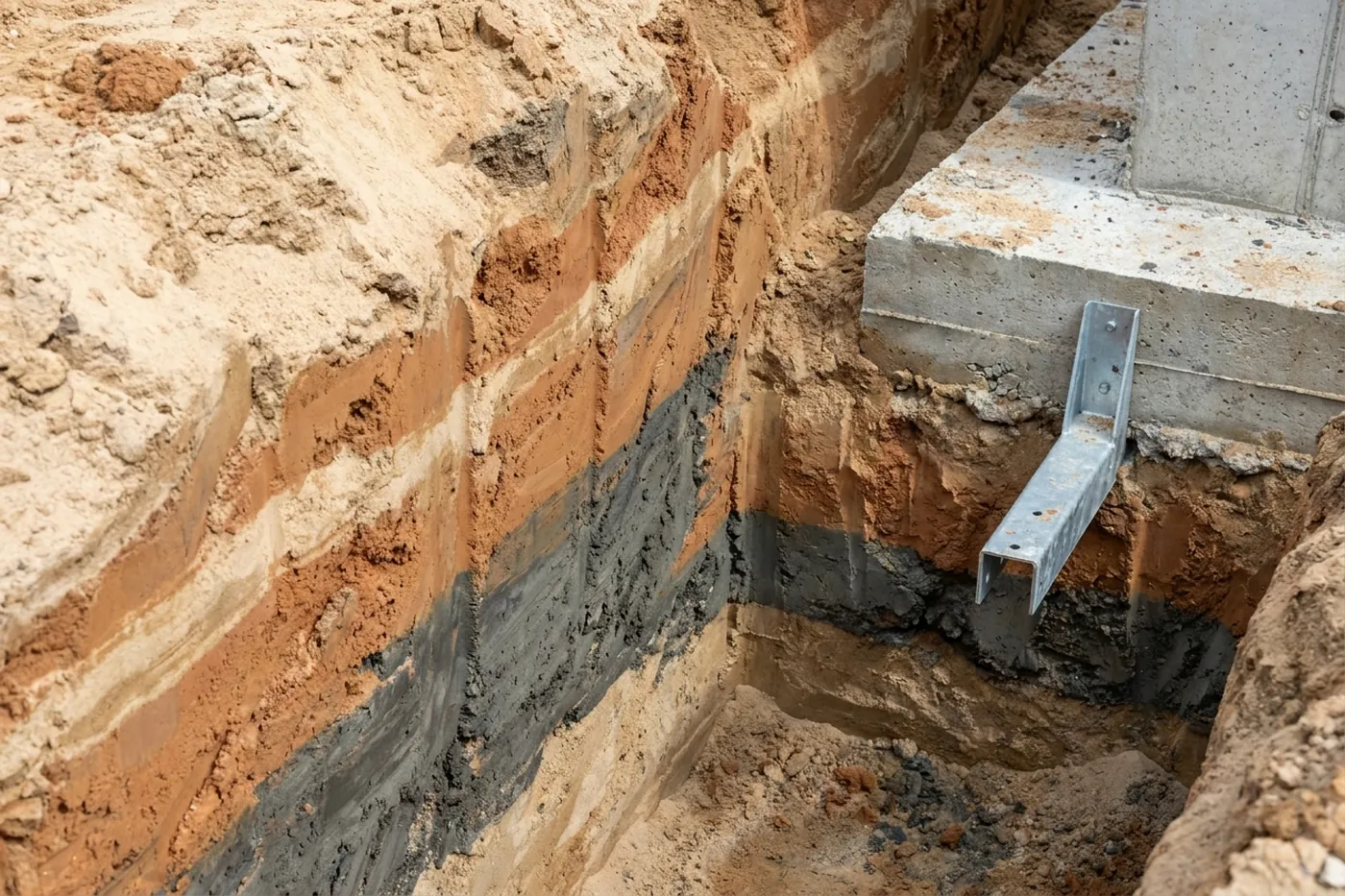
Concrete laid for a car to sit on is thin, weighs almost nothing by comparison, and went down on subgrade nobody surveyed. It also runs the length of the property, crossing the very same layer boundaries that pass under the building itself.
That combination makes it sensitive. Where material under one part of the lot is moving, the flatwork above it registers the change while the house is still bridging. A sunken section is not automatically a warning about the structure — but a sunken section on the same side as an interior symptom is a pattern worth putting on the survey.
Foam or mudjacking
| Polyurethane foam | Mudjacking | |
|---|---|---|
| What it costs | $1,200–$2,500 | $500–$1,500 |
| Load it imposes | Negligible | Real — you are pumping in cement |
| Back in service | Same visit | Next day |
| Holes drilled | Pencil-width | Thumb-width |
| Choose it when | What is underneath already failed to carry a load | Ground is sound and the budget is tight |
The weight row deserves a thought rather than a glance. Where a void opened because the material beneath could not carry what was already there, injecting a heavy slurry into it is a decision to make deliberately.
When lifting is the wrong answer
Raising a slab deals with the cavity, not with whatever hollowed it out. A stretch of concrete that has already been raised once and dropped again has told you plainly that the cause never stopped.
Spend the next money on the why instead. Nine times in ten it is water going somewhere it was never meant to — a drainage matter — and occasionally it is a layer boundary passing directly beneath that panel. Paying for a third lift is an expensive way to keep not asking.
Concrete leveling — asked and answered
What does concrete leveling cost in Hattiesburg?
Concrete leveling runs $500-$2,500 for most driveways, patios, and walkways. Polyurethane foam sits at the upper end and cures in minutes; mudjacking costs less and adds weight. Both raise the slab by filling the void that opened beneath it.
Is sunken flatwork a warning about the house?
Sometimes, and it is to read. Flatwork crosses the same buried material boundaries the house does but carries almost no load and sits on far less preparation, so it reports a change in the ground earlier. Sunken flatwork on the same side as an interior symptom is a pattern.
Foam or mudjacking?
Foam is light, cures in minutes, and needs small holes. Mudjacking is cheaper and uses a cement slurry that adds real weight. Where the void opened because material below is compressible, adding mass is worth thinking about rather than deciding on price alone.
How long will it stay level?
As long as the ground beneath stays put. Leveling fills today's void; if what created it is still working, it reopens. Flatwork that has been lifted twice in the same place is telling you to find the cause rather than buy a third lift.
Can you level the slab my house sits on?
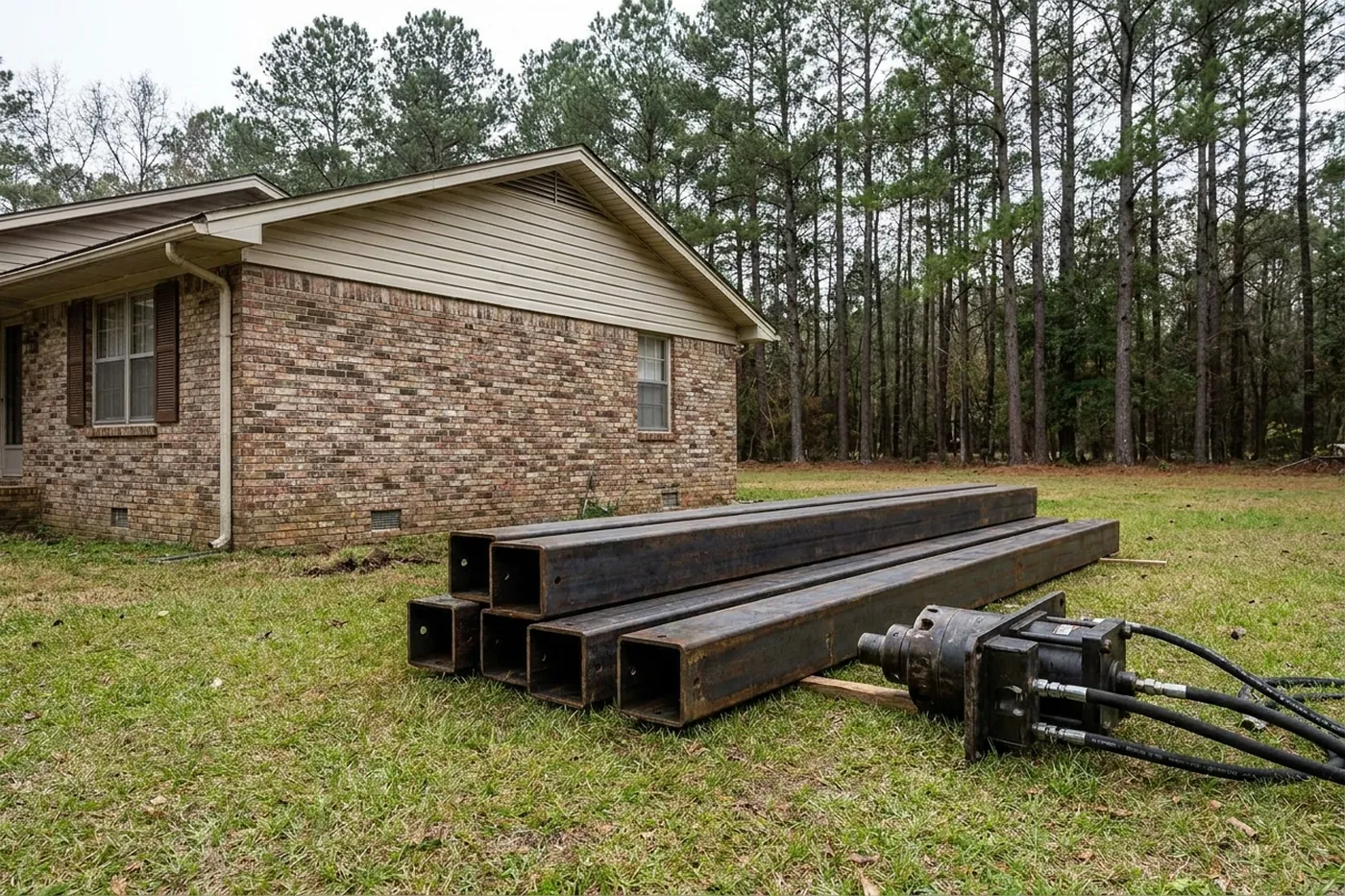
No - those are separate operations. Filling a cavity beneath unloaded concrete is not the same as transferring a building's weight onto steel that reaches competent material. If someone offers to foam-lift a house, the question to put to them is what the foam is bearing against.
Get a Hattiesburg elevation survey
Tell us which rooms are affected and which are not. On interbedded ground that contrast is the most useful thing you can give us — a house where the front is fine and the back bedroom is dropping is telling us something about what each end is sitting on. You get a call back from a local specialist who serves Hattiesburg.